Sunset Park
Loft Space.
Tell us once what you're after — including the floors that never hit the listing sites. A person reads it. That's the whole thing.
Seven questions.
That's the whole thing.
Under two minutes. No account, no login. A person reads every one.
How much room do you need?
Before you tour, hear what to look for.
Structure, submarkets, and the questions worth asking on a walkthrough — including the ones that decide whether a floor works for what you make.
The managed campus, or an independent building?
A two-person walkthrough of how Sunset Park's loft market actually splits. 6 minutes.
AI-narrated
Read the transcript
Host 1Right. So if you are actually trying to lease a commercial office loft in Sunset Park, Brooklyn, you are basically making one fundamental choice before you even look at a single floor plan.
Host 2Exactly. Because you're essentially choosing your entire operating ecosystem right out of the gate.
Host 1Today's deep dive is pulling from local real estate zoning maps and tenant leasing guides, plus some historical archives. We really want to figure out how to navigate this whole industrial labyrinth.
Host 2Well, the big divide is whether you go inside the Industry City campus — this massive six-million-square-foot behemoth with one master landlord — or out into the independent buildings elsewhere in the neighborhood.
Host 1It's like choosing between a high-end all-inclusive resort and an off-grid cabin. Inside the campus you get curated co-tenants, on-site management, food halls, coordinated freight.
Host 2Right, but you pay a premium for those amenities and you play by strict landlord rules. Go independent and you deal directly with one owner. You control your own freight dock, which slashes your costs. But there is absolutely zero handholding.
Host 1And that binary divide exists here because of a very specific historical timeline. Back in 1902, Irving T. Bush built a massive integrated manufacturing complex here.
Host 2And then the U.S. Army built the Brooklyn Army Terminal in 1918 and 1919 — a waterfront built specifically for shipping and rail. But as shipping containerized and moved to New Jersey after the war, these structures emptied out through the seventies and eighties.
Host 1But unlike Gowanus or Williamsburg, Sunset Park survived. The city created the Industrial Business Zone designation back in 2006.
Host 2That was huge. It permanently blocked residential rezoning. That legal shield essentially saved the footprint — they couldn't just turn it all into luxury condos. It allowed the 2013 Industry City redevelopment to happen while protecting the immigrant manufacturing community along Fifth and Eighth Avenues.
Host 1The heavy garment and food production places that never left. So because of that history, a tenant today is navigating three entirely different submarkets.
Host 2First is the Industry City campus — highly finished, amenitized, master-leased. Then the Brooklyn Army Terminal, which operates under totally different mechanics: managed by the Economic Development Corporation, heavy industrial, enormous floor plates.
Host 1But our sources mention an application process. You can't just sign a lease and get the keys?
Host 2Not at all. It is definitely not a standard broker deal. You literally have to prove your business brings specific economic value to the city just to get approved.
Host 1That sounds incredibly slow.
Host 2It is. So if that bureaucracy is too slow and Industry City is too curated, you land in the third submarket: the inland avenue buildings. Raw, the cheapest option, and basically entirely word of mouth.
Host 1Which brings us to the actual tour. Say you've picked your submarket — what's on the checklist?
Host 2First, verify clear-to-deck ceiling height, measuring to the actual structural roof, not some false HVAC bottom. Then freight: you need the freight elevator weight capacity in pounds, and you need to see if that elevator car opens directly into your demised space.
Host 1Meaning your actual private locked workspace, instead of dragging pallets down a shared public corridor.
Host 2Exactly. And get the floor load capacity in writing, in pounds per square foot. Landlords hand out beautiful schematic floor plans, but I've seen spaces where a single unmapped column completely ruins a forklift's turning radius.
Host 1Can you trust those paper diagrams for column spacing?
Host 2Never. You must pull out a tape measure and measure the columns yourself. Do not trust a schematic when you're trying to fit specific machinery on a floor.
Host 1So literally bring a tape measure to the tour.
Host 2One hundred percent. And while you have it out, ask for the exact breakdown of rentable versus usable square footage.
Host 1It's like buying a bag of chips. You're paying for the whole bag, but half of it is air.
Host 2Perfect analogy. You might sign a lease for 5,000 square feet, but after the landlord factors in your share of the lobby and common hallways, your usable floor space might only be 3,800.
Host 1That's a huge drop, which makes space planning critical.
Host 2Especially with the neighborhood's built-in friction. Sunset Park relies entirely on the local R train.
Host 1No express trains, so it's a genuinely long ride into Manhattan. And if you choose a campus building, your employees might be adding a ten- to fifteen-minute walk from the station just to reach the suite.
Host 2And outside that campus, almost nothing is move-in ready. Independent landlords mostly offer raw space, which means the tenant funds and manages the entire build-out.
Host 1So if you need a turnkey finish but lack the capital to build it out yourself, you really have to look at the campus.
Host 2Or look in a completely different neighborhood entirely. Because this market operates so much in the shadows, navigating it requires an inside line.
Host 1That's why our sources point to a specific unlisted gateway — a simple seven-question form on the site that bypasses the public listings. No account needed.
Host 2It puts a real person to work matching you directly with spaces that never hit the open market. In an era where we expect everything to be one click away, a massive chunk of the real economy is still hiding in plain sight.
Host 1Trading entirely on invisible off-market relationships. It's all about who you know — and knowing which heavy steel door to knock on to find your ideal commercial office loft.
Green-Wood down to Sixty-fifth, the Upper Bay across to Ninth Avenue — the largest concentration of intact industrial floor space left in New York City, and the only one still protected as such.
Four lines, a ferry, and a walk we won't talk you out of.
This is the honest objection to Sunset Park, and it's better to have it now than on a tour. Everything else about these buildings is the best in the city.
- 36 St
Three lines in one station, and the closest subway to the waterfront campuses — which still means a walk.
- 45 St
- 53 St
- 59 St
Serves the southern half and the inland industrial blocks on Second and Third.
- Brooklyn Army Terminal
Lands inside the campus itself — the pleasant way in, and the only route that skips the walk entirely.
- Third Av
- Fifth Av
- 39 St
- Church Av
The B37 down Third Avenue is how most people actually close the last stretch to the waterfront buildings.
Say it plainly: from the R at Fourth Avenue to the waterfront buildings is ten to fifteen minutes on foot, and the Gowanus Expressway sits between the neighborhood and the water. The ferry lands inside the campus and skips all of it. Driving and loading, meanwhile, are the best of anywhere we cover — which is the trade this neighborhood asks you to make.
Built as one machine, and it still runs like one.
1895 → today
A ridge above the harbor
Irish families arrive first, fleeing the famine, followed by Norwegian, Finnish and Polish immigrants through the 1880s and 90s — most of the neighborhood's housing goes up in that window. The name comes later, from the park on the ridge, which still has the best harbor view in Brooklyn.
Bush's Folly
Irving T. Bush buys back his father's old refinery site and starts building a freight terminal — six warehouses and one pier at 25th Street. The rail trade laughs and nicknames it Bush's Folly, because getting freight cars from Manhattan means floating them across the harbor on barges. Bush does it anyway, and within twenty years the complex spans twenty waterfront blocks with eighteen piers and forty-three miles of track.
The factory lofts
Bush builds rows of block-long six-story factory buildings, served by rail sidings, carfloats and his own truck fleet. It is the first fully integrated manufacturing and warehousing facility in the country — make it, store it, and ship it by rail or water, all under one management. Those buildings are the loft stock tenants tour today.
Alku, and Finntown
Finnish families on 43rd Street pool their money and build Alku — the first non-profit housing co-operative in the United States. More than thirty Finnish co-op buildings follow, and Finntown runs from 40th to 45th between Fifth and Ninth. Roughly three quarters of New York's apartments are co-ops today; the idea started on this block.
The Army Terminal
The Army wants its own port and gets it in a year. Cass Gilbert designs and Turner Construction builds ninety-seven acres and about five million square feet of reinforced concrete — two warehouses, one of them nearly a thousand feet long, with skylit interior atriums and cranes that move material between floors. It becomes the main departure point for troops and supplies to Europe in both wars.
A city inside a city
Bush Terminal employs thirty-five thousand people and runs its own police force, its own court system, its own power plants and its own restaurants. Nothing else in New York industry has ever operated at that scale in one place.
The expressway, and the long decline
Robert Moses runs the Gowanus Expressway along the pillars of the old Third Avenue El, destroying hundreds of buildings and cutting the waterfront off from the neighborhood behind it — then widens it in 1955. Containerization moves shipping to New Jersey, the piers empty, and the Army Terminal is deactivated by the mid-1970s. Bush Terminal is renamed Industry City in the 1960s, which does not help much.
Back to work, and the fight over how
The city reopens the Army Terminal in 1987 for light industry. Industry City is bought in 2013 and grows to thousands of jobs across sixteen buildings on Third Avenue. In 2020 its owners withdraw a proposed rezoning after opposition from local officials and four members of Congress, who argued it would erode the neighborhood's blue-collar job base — and proceed with as-of-right leasing instead. That outcome is why the industrial floors here are still industrial.
Who you'd be sharing the block with.
- Metal and wood shops in the Industry City buildings
- Furniture and millwork off Third Ave
- Ceramics and glass studios in the Bush Terminal blocks
- Sign, display and set fabricators near 39th St
- Commissary and production kitchens along Third Ave
- Bakeries and small-batch producers in the terminal buildings
- Distilleries and breweries near 36th St
- Cold storage and distribution toward the waterfront
- Artist studios in the Bush Terminal lofts
- Design and architecture practices at Industry City
- Photo studios in the concrete floors
- Apparel and sampling rooms off Third Ave
- Light manufacturers at the Brooklyn Army Terminal
- Hardware and product companies on Second Ave
- Life sciences and lab space near the waterfront
- Logistics and last-mile toward the marine terminal
- The Chinatown along Eighth Avenue
- The Latin American food on Fifth Avenue
- Japan Village at Industry City
- The food halls in the Third Avenue courtyards
- Green-Wood Cemetery along the northern edge
- Sunset Park itself, and the harbor view
- Bush Terminal Piers Park
- The ferry landing at the Army Terminal
Why bother
The best floors are gone before they're listed. Character space moves through people, not portals — so we do it the other way around. You tell us what you'd love. We keep an eye out.
You told us what you need. That's where it ends.
No newsletter, no CRM queue, no "just checking in." A person reads your brief and reaches out directly when a floor's worth showing you.
- 01
We never sell, share or rent your brief — not to landlords, not to other brokers, not to a data company.
- 02
No newsletters or mass blasts. When we get in touch, it's a direct email or text about a specific space.
- 03
A person reads it. Not a bot, not a queue in some CRM.
- 04
Tell us to stop and we stop. Simple as that.
The Definitive Guide to Sunset Park Industrial Lofts
the Bush Terminal blocks, the waterfront campuses, and the last protected industrial floors in New York City.
Sunset Park not quite it?
We work the surrounding neighborhoods too. Mention it in the brief.
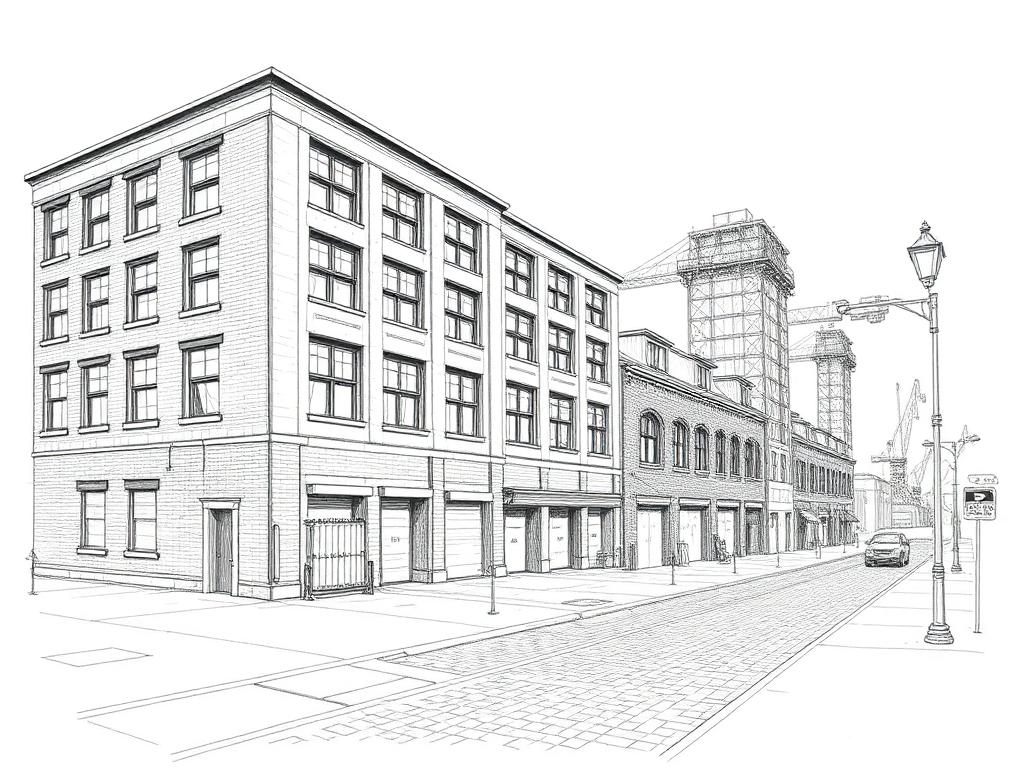
The other side of the Gowanus Expressway: brick and timber warehouses on the water, roll-up doors and truck access, and no subway at all. Rawer and smaller-scale than Sunset Park's concrete campuses.
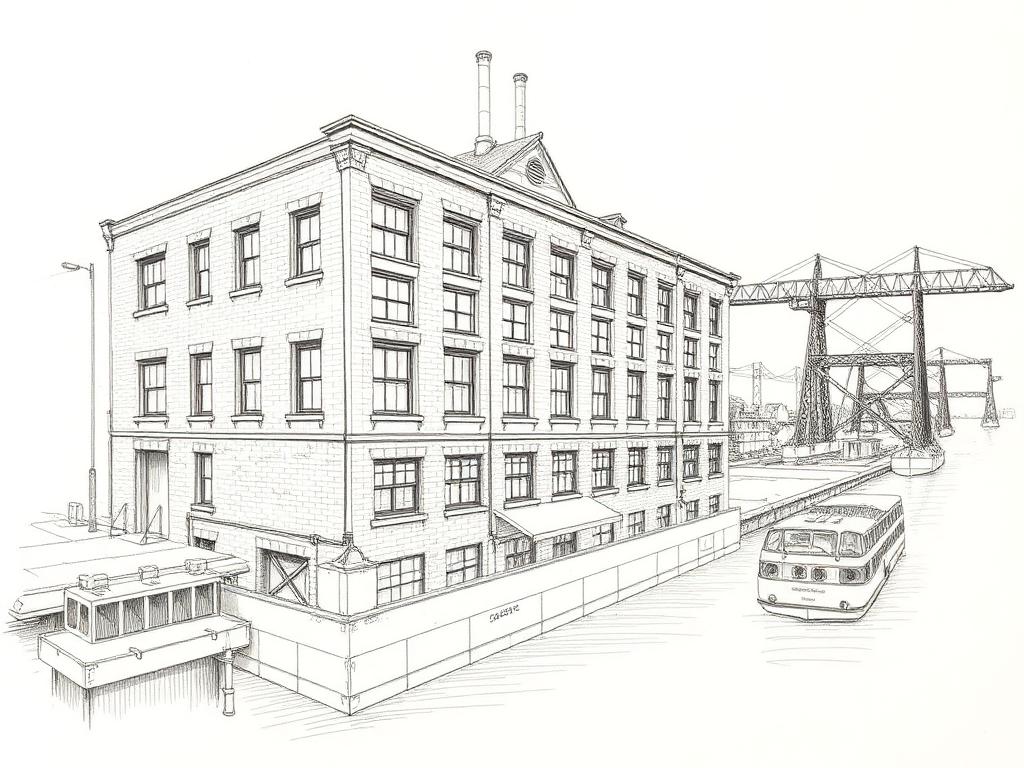
Low canal-side industrial buildings and small brick workshops, twenty minutes north. Livelier and closer in, but rezoned for residential — the opposite of Sunset Park's protected industrial ground.
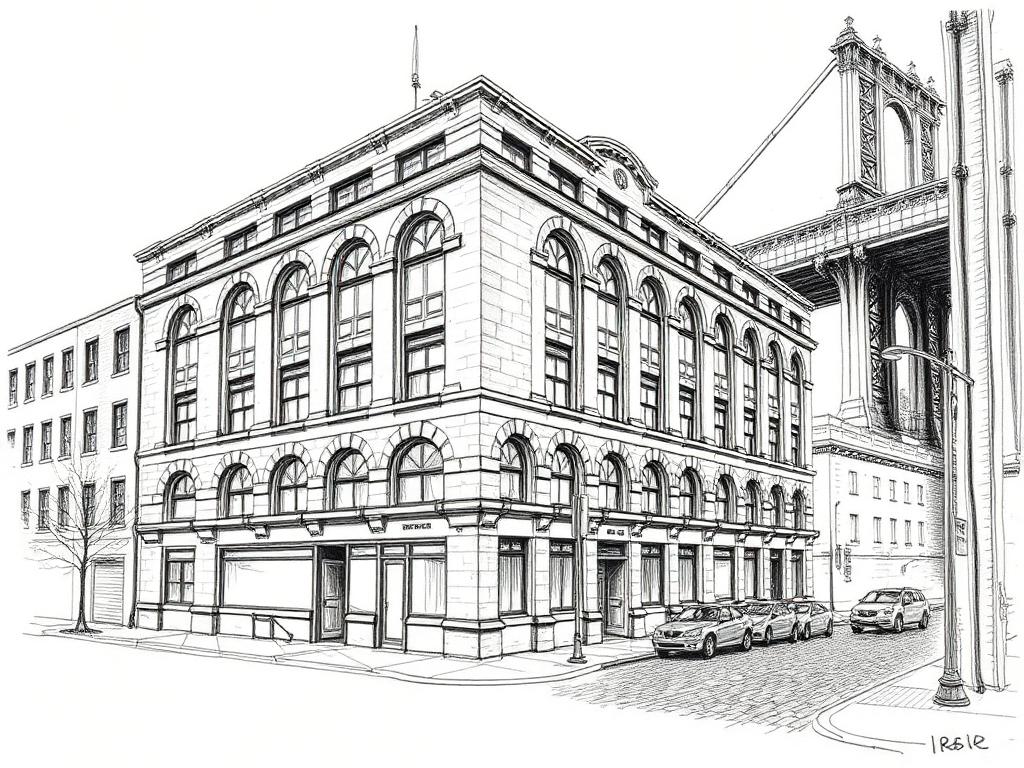
Cobblestone streets and heavy timber and concrete lofts under the bridges. Finished, expensive and well-connected, where Sunset Park trades polish for plate size and freight.
What people ask before they take a loft in Sunset Park.
01What counts as a 'creative office loft' in Sunset Park?
02How much does loft space in Sunset Park cost?
03What's the smallest space I can rent here?
04How do I get to Sunset Park?
05Can I do fabrication, food production or light manufacturing here?
06What actually happened with the Industry City rezoning?
07Is my lease secure here, or is this another shrinking industrial district?
08How is Sunset Park different from Gowanus or Red Hook?
09What are the classic Sunset Park loft buildings?
10Do you actually have off-market listings?
Got one we didn't cover? Put it in the brief above, or call 646-291-2018.
The words that decide what you're signing.
Every term that turns up on a tour, in a floor plan or in a lease — what it means, why it costs you, and how it behaves in this neighborhood specifically.
- Industrial Business Zone
A city-designated area where industrial use is protected, residential conversion is not permitted, and the city actively supports manufacturing tenancy.
Why it mattersInside one, machinery, venting, overnight hours and truck traffic are the expected use rather than something you negotiate for. The land is not on a path to housing.
In Sunset ParkMost of the Sunset Park waterfront sits inside the Southwest Brooklyn Industrial Business Zone, and in 2020 an attempt to rezone Industry City was withdrawn after local and congressional opposition. That is the strongest answer we can give anywhere in this network: if you are spending real money on a build-out and need the use to still be legal in ten years, this is the safest bet in the city.
- Reinforced-concrete daylight factory
Early-twentieth-century construction using concrete columns with flared mushroom capitals and flat slabs, with very large windows on multiple exposures.
Why it mattersBuilt for machinery and for light, so wide column grids, high and uniform floor loads, and daylight deep into the plate.
In Sunset ParkThis is the Bush Terminal stock — block-long six-storey buildings laid out around rail sidings rather than street frontage, which is why the plates are enormous by New York standards. It is the reason contiguous space above twenty thousand square feet is actually available here and almost nowhere else in the city.
- Clear height
The usable vertical distance from the floor to the lowest obstruction — a sprinkler head, a duct, a joist. Distinct from the height to the underside of the deck.
Why it mattersIt governs racking, forklift reach, and whether a mezzanine is possible. In industrial space it is the number that decides how much you can actually store.
In Sunset ParkAsk for both numbers: to deck, and to the lowest obstruction. In the terminal buildings the difference can be several feet, and it is the second number that determines how high you can stack.
- Floor load
The weight a floor is rated to carry, in pounds per square foot. Live load is what you can put on it; dead load is the structure itself.
Why it mattersRacking, pallets, presses, cold storage and dense inventory all need a number in writing before anything is ordered.
In Sunset ParkThe concrete stock here carries very well — these floors were built to hold machinery and freight moving on rail. It is one of the few places where the answer is usually yes rather than a negotiation, but still get the rating for your specific floor in writing.
- Column spacing
The clear distance between structural columns, sometimes called the bay.
Why it mattersIn industrial space it decides racking layout, forklift aisles and whether a production line fits without turning corners.
In Sunset ParkWider here than almost anywhere in the network, because the buildings were laid out around rail rather than around street frontage. If you have been frustrated by column spacing in Brooklyn's timber stock, this is the reason to look here.
- Loading dock and dock leveler
A raised platform at trailer-bed height. The leveler is the adjustable plate that bridges the gap between the dock and the truck.
Why it mattersIt is what makes palletised freight possible. Without a dock, everything comes off a truck by hand or on a lift gate.
In Sunset ParkAsk how many dock positions serve your space, whether they are yours or shared, and whether the levelers work. On a campus, also ask how dock time is scheduled — a dock you have to book two days ahead is a different business from one you can back into.
- Drive-in door
A door at floor level wide and tall enough to drive a vehicle inside the building.
Why it mattersIt suits vans, box trucks and anything unloaded by hand. It is not a substitute for a dock if you are moving pallets on a trailer.
In Sunset ParkBoth exist here. If your freight arrives on full trailers you want a dock; if it arrives in vans you want a drive-in. Being sold one when you need the other is the most common and most expensive mistake in this neighborhood.
- Truck court
The paved apron in front of a dock where a truck manoeuvres and parks. Its depth determines what length of vehicle can actually back in.
Why it mattersA dock with an inadequate truck court is a dock you cannot use with a full trailer. It is rarely mentioned in a listing and never on a floor plan.
In Sunset ParkThis is the advantage of purpose-built campuses over converted buildings. Ask the depth of the court, and ask whether a fifty-three foot trailer regularly delivers to that dock today — the honest answer is easy for a landlord to give.
- Freight scheduling
On a managed campus, the process for booking the freight elevator or a dock position, including notice required, permitted hours and any charge.
Why it mattersIn multi-tenant industrial buildings, access is a shared resource rather than something available on demand. How it is rationed shapes your operating day.
In Sunset ParkThis is the trade-off of a professionally managed campus: better maintained equipment, less spontaneous access. Ask how far ahead you book, whether weekends are possible, and what it costs — those three answers matter more than the raw capacity.
- Three-phase power
An electrical service delivering power in three alternating currents rather than one. Required for most serious machinery, large compressors, refrigeration and industrial ovens.
Why it mattersAdding it is a utility timeline, not a landlord favor, and it can run months. Ask what is available, at what amperage, what the panel has spare, and who pays.
In Sunset ParkWidely available across the waterfront campuses, because the buildings were purpose-built for manufacturing and never stopped. Where you need more than exists, the managed buildings are generally better placed to deliver it than an independent owner — ask what upgrades they have done for other tenants recently.
- Operating expenses and common area charges
Costs beyond base rent — building maintenance, security, insurance, trash, snow clearance, management — usually billed as an additional charge or as an escalation over a base year.
Why it mattersThey can add meaningfully to your real cost, and they are far more visible on a professionally managed campus than in a single-owner building where the landlord absorbs some of it.
In Sunset ParkThis is the most important cost question in Sunset Park, because a managed campus and an independent building on the same block price completely differently once services are included. Ask for the all-in number — base rent plus charges plus loading, freight and after-hours access — before comparing two spaces. The face rent alone will mislead you here more than anywhere else in the network.
- Certificate of occupancy
The city document stating what a building is legally permitted to be used for, floor by floor.
Why it mattersIt governs your use regardless of what the lease says or what the last tenant did.
In Sunset ParkIn a working industrial district the certificate is usually the easy part — but confirm your specific use rather than assuming. Food production, cold storage and anything with venting each carry their own requirements on top of the zoning.
- Letter of intent
A short document setting out the commercial terms — rent, term, free rent, improvement money — before lawyers draft a lease. Generally non-binding, except for any confidentiality or exclusivity clauses inside it.
Why it mattersTerms conceded in a letter of intent are very hard to claw back in the lease, and the parts that are binding are binding.
In Sunset ParkPut the operational terms in the letter: dock positions, freight hours, three-phase amperage, and what is included in the charges. On a managed campus these are negotiated at letter stage and become standard-form afterwards, so it is much harder to change them later.
- Good Guy Guarantee
A limited personal guarantee, near-universal in New York commercial leases. You personally guarantee the rent only until you vacate — provided you give the agreed notice, hand the space back broom-clean, and are current on rent. You are not personally liable for the balance of the term.
Why it mattersIt is the difference between walking away owing two months and walking away owing four years. Some landlords present a full personal guarantee and call it a good guy. Read what the document actually says.
In Sunset ParkThe larger campus owners here often accept a corporate guarantee or a bigger security deposit instead of a personal one, particularly from an established business. Ask — it is a real conversation with a professional landlord in a way it rarely is with a single-building owner.
- Escalation
How the rent rises over the term. Usually a fixed annual percentage, but sometimes tied to the porter's wage — a union building-service wage rate — or to an inflation index.
Why it mattersA rent that looks flat is not. At three percent a year, the fifth year of a five-year deal is roughly thirteen percent above the first. Budget from the last year, not the first.
In Sunset ParkBecause the zoning here is protected and the buildings are not going anywhere, longer terms are both available and worth taking. If you are investing in the floor, a ten-year deal at a fixed escalation is usually a better trade than five years a dollar cheaper.
- TI allowance and work letter
The improvement money a landlord contributes to a build-out, and the document defining who builds what, to what standard, and who pays for it.
Why it mattersAs-is and vanilla box mean very different things. Without a work letter you can find yourself paying for power, venting, a dock door or a demising wall you assumed came with the space.
In Sunset ParkThe campus owners here are capitalised and expect to contribute, unlike most of Brooklyn — real improvement money is available on a decent-sized deal. Get the electrical service and any dock or door work into the work letter explicitly, since both are expensive and both stay with the building when you leave.
You know what to ask now. Tell us what you're after.
Seven questions, no account, nothing to download. A person reads every one — and comes back with floors that match, including the ones that never reach a listing site.
Written from buildings we've actually walked. If something here is wrong, or a term is missing, tell us — we'd rather fix it than have it repeated back to us on a tour.
Got a loft
building here?
We probably know a tenant for it. Quietly.
Let's talk→